
To More Inquiry

Turkey is a transcontinental country located mainly on the Anatolian Peninsula in Western Asia, with a smaller portion on the Balkan Peninsula in Southeastern Europe. It shares borders with eight countries: Greece and Bulgaria to the northwest; Georgia to the northeast; Armenia, Azerbaijan, and Iran to the east; and Iraq and Syria to the south. The country is surrounded by three different seas: the Aegean Sea to the west, the Black Sea to the north, and the Mediterranean Sea to the south.
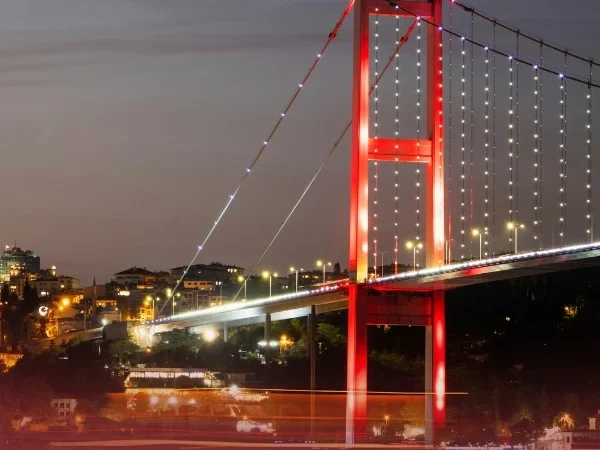
Turkey has a rich cultural heritage that reflects its position as a bridge between East and West. Historically known as Anatolia, the region has been home to many ancient civilizations, including the Hittites, Greeks, Romans, Byzantines, and Ottomans. Istanbul, formerly known as Byzantium and Constantinople, is Turkey’s largest city and a major cultural and economic center.
Modern Turkey was founded in 1923 by Mustafa Kemal Atatürk, who implemented extensive political, economic, and cultural reforms to transform the former Ottoman Empire into a secular, democratic, and modern nation-state. The capital city is Ankara.
Turkey’s diverse landscapes include mountains, rivers, and coastal plains, making it a popular destination for tourism. Notable landmarks include the historic sites of Ephesus, Cappadocia’s unique rock formations, Pamukkale’s terraces, and the ancient city of Troy.
The official language is Turkish, and the country has a predominantly Muslim population, with secularism enshrined in its constitution. Turkey’s economy is classified as an emerging market and is driven by sectors such as automotive, textiles, electronics, and tourism. It is a member of various international organizations, including the United Nations, NATO, and the G20.